
How are You Feeling Today? How to Give Your Emotions Room
“How are you feeling today?”
You might respond, “Good,” “Fine,” “Okay,” or even “Great!”
Notice how vague these words are. Are they really identifying feelings? What does ‘fine’ mean? Are you feeling happy, motivated, generous, or are you giving the expected answer because you’re unsure if the person asking really wants to know how you’re feeling?
Sometimes, I’m a little out of touch with my feelings, and I struggle to name them and give them room to exist. Most of the time, it’s because I’m in a hurry … a hurry to move past those feelings and on to something that I think is more productive.
But what if our feelings are productive? What if they’re trying to tell us something or point out something that needs our attention? Maybe I need to take a minute every so often to give my feelings room. That practice might help me become more aware of them and learn a little bit about what they want me to know.
Here’s an example: sometimes, I feel frustrated. I could easily brush it off and decide it’s because I’m working on something hard. But if I sit with that frustration a little bit, I might actually learn that I’m frustrated because I’m feeling lonely. I work alone all week in my studio. Maybe that frustration is telling me that I need to schedule a walk with a friend, and after I spend time with someone, I can better focus on the hard work at hand … without the frustration.
“So, how are you feeling today?”
Name Your Feeling
Naming your feelings is the first step to deeper self-awareness. It helps you identify your feelings, validates the emotions in your body, and helps you clarify the reason they’re there.
I can get in a rut with emotion names, using the same words for several different emotions just because they are the words I’m most familiar with. Sometimes, my feelings don’t quite fit the words I think of easily. Having a list of words helps me identify emotions that are slightly different from the main categories: sadness, happiness, fear, anger, and disgust (surprise and love are main categories, too). If you’re like me and you need a little help with words, here are a few words that might help you start to identify those emotions.

Draw Your Feeling
We can even get creative while we learn more about our feelings. Let’s make a whiteboard face and draw our emotions with erasable markers. Then, we can check in with ourselves every day or even two times a day to see how we’re feeling.
Let’s get started.
You’ll need:
- A pen
- A small piece of blank paper, cardstock works great
- Glossy, clear sticker paper
- Erasable markers
Draw your face and hair in ink on a small piece of paper. If you want to draw a new hairstyle each day or use the face for more than one person, you can just draw the chin line. I put one face with hair on one side of my paper and one face without hair on the other to have both options.
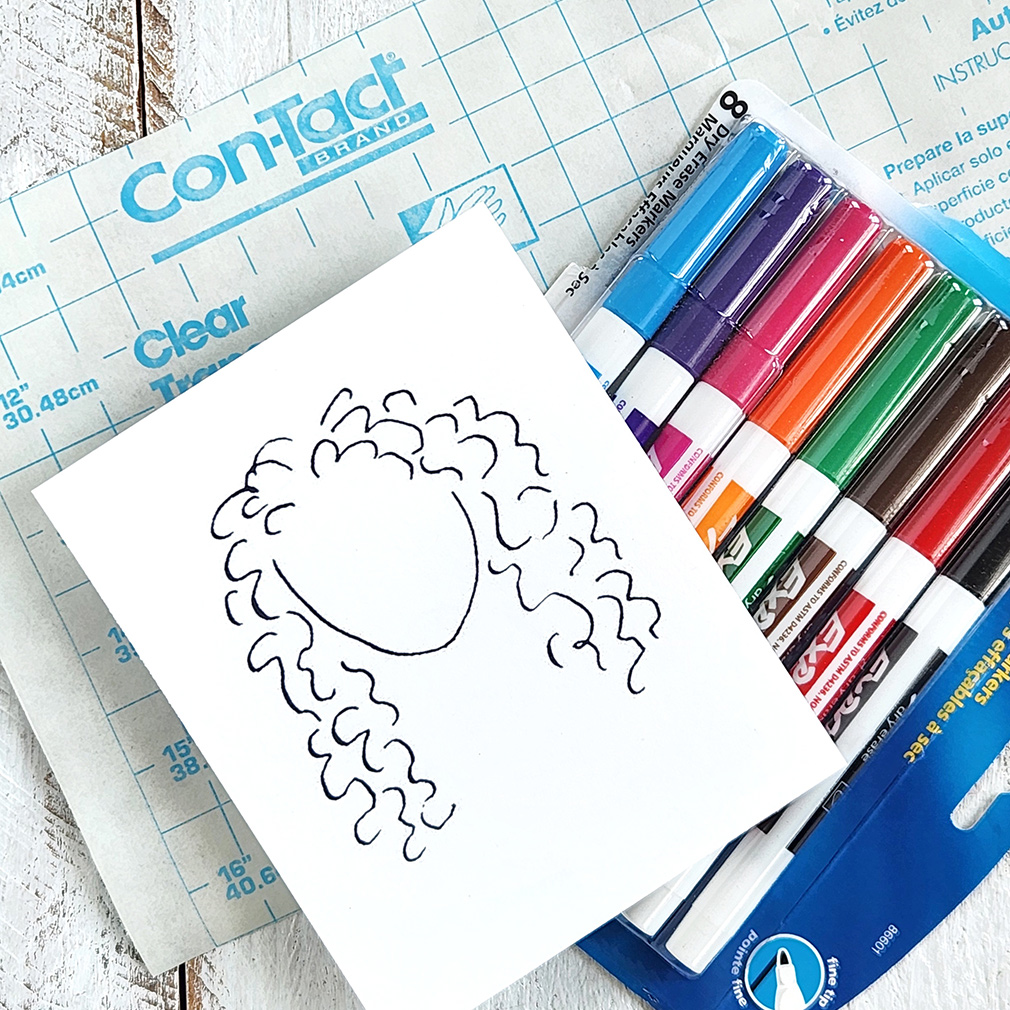
Cover it with glossy sticker paper. Contact paper will work in a pinch, but some erasable markers may not erase completely, as you’ll see on my later photos.

Use whiteboard markers to draw your feelings on your face. Name the feeling under your face.
Here are some examples of feelings I drew.
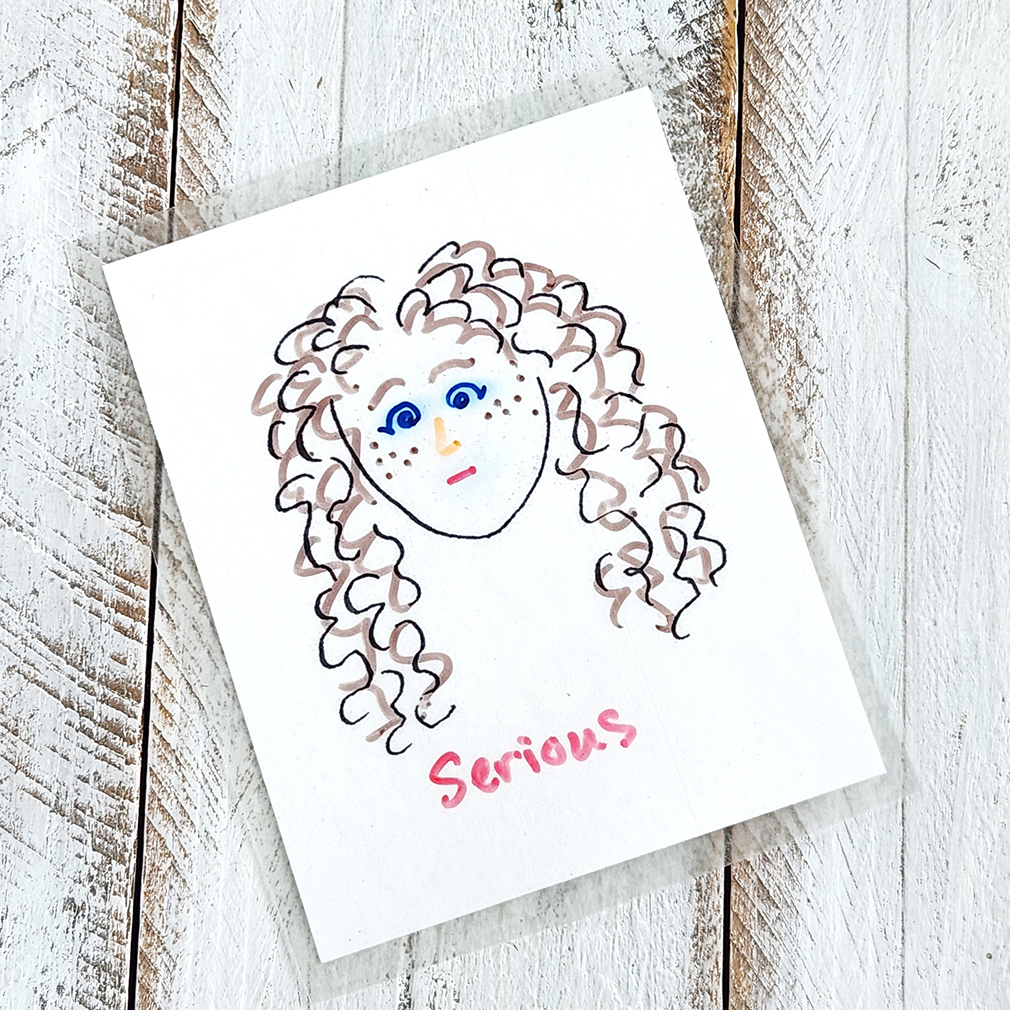


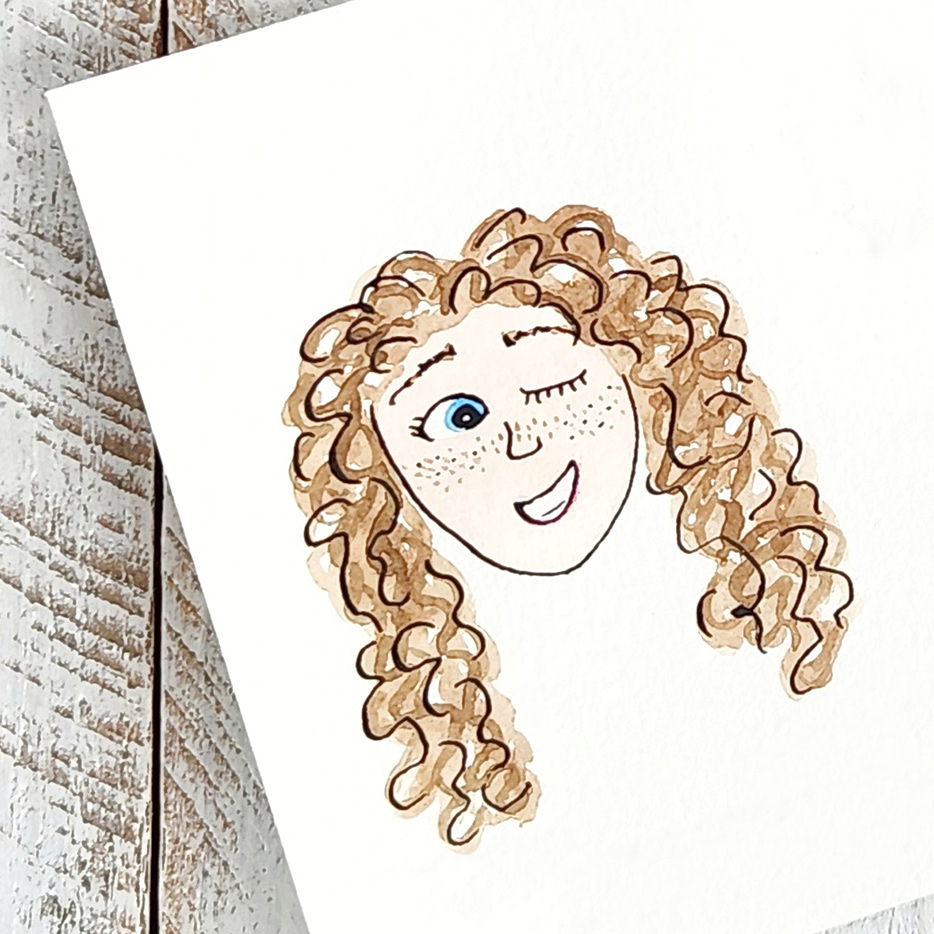
*Watercolor and ink drawing alternative: Draw your face with waterproof ink. Use watercolor to add the color details. Draw one for each different emotion until you have a good variety. Then, as you take it further with the next step. Look at the emotion card you have instead of drawing a new face.
Here’s one I drew of me when I feel playful.
Take it one step further
Do an emotional check-in every day or each morning and night. Draw your feelings, name them, and write a note about what is impacting them. This daily practice will help you become more aware of the things happening around you, learn to name the feelings you have, and grow your emotional awareness.
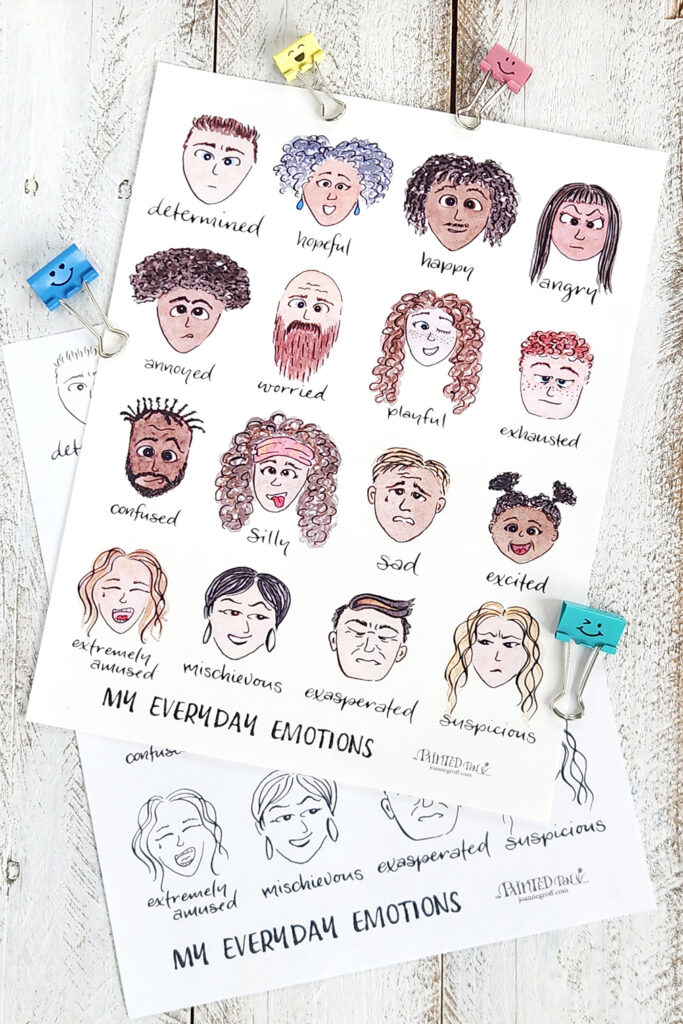
*If you want a printable feeling chart you can color yourself or hang on your wall, here’s one I created as a fun way to help you identify your Everyday Emotions. Find it here: My Everyday Emotions Feeling Face Chart.

Joanne Groff
Just a brainy creative with a fascination about how people think and understand. I use watercolor and letter design to encourage connection ... with self, the environment, and especially the people who live there.

